Best Time to Visit Nepal for Trekking: Full Guide by Month
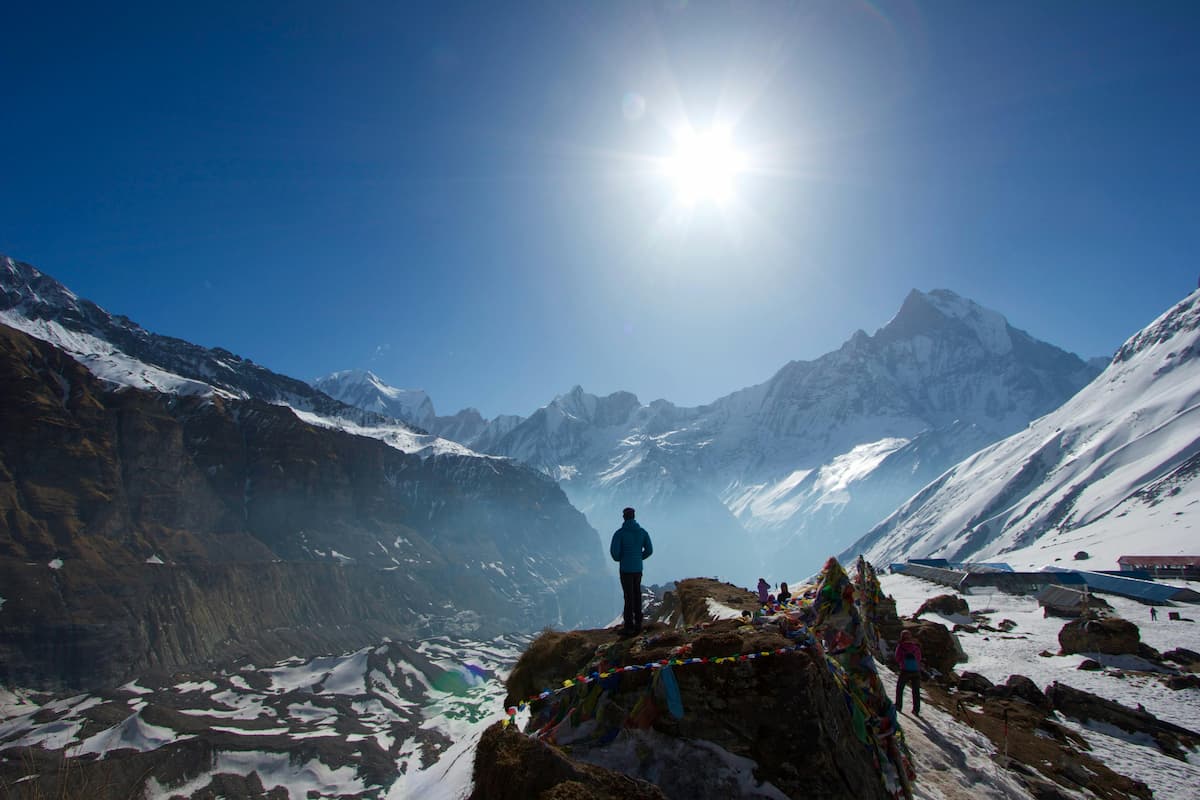
The first time I woke in the Himalaya, the world was pink. Sunrise brushed across the Annapurna Range like a blessing, and the mountains stepped out of the dark—ancient, impossible, alive. Nepal does that. It resets your idea of what’s big and what matters.
But here’s the truth: Nepal is many Nepals, depending on when you visit. In spring, hills glow with rhododendron blossom. In autumn, peaks are sharp and clean under the widest blue. In monsoon, valleys turn emerald and waterfalls leap from cliffs. In winter, the air goes crisp and silence becomes a friend.
This guide walks you month-by-month through Nepal’s shifting seasons—weather, trekking conditions, festivals, scenery, and reasons to go—so you can choose the journey that fits your story.
When is the best time to visit Nepal?
| Season | Months | Why go | Trade-off |
|---|---|---|---|
| Spring | Mar–May | Blossoms, warming temps, superb trekking | Crowds grow by late April |
| Monsoon (Summer) | Jun–Aug | Lush valleys, dramatic skies, deep culture | Rain, clouds, possible landslides in some regions |
| Autumn | Sep–Nov | Peak visibility, festivals, ideal trekking | Busiest season |
| Winter | Dec–Feb | Clear air, quiet trails, low crowds | Cold at altitude; some high passes close |
January — Quiet trails, crystal air
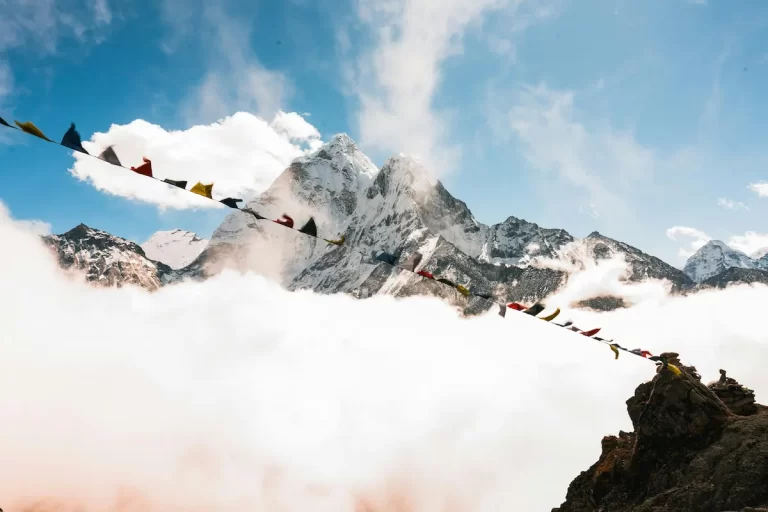
January arrives with a stillness that sharpens everything: prayer flags snap like bright punctuation, and the Himalaya sits etched in winter blue. In the Kathmandu Valley, mornings bite but afternoons turn gentle, perfect for temples, courtyards, and bowls of steaming thukpa. Lower-to-mid altitude treks glow with sunlit terraces and long views; high passes can close, but that nudges you toward more intimate, village-to-village days. Nights are for stoves, stories, and the kind of star fields that make you step outside twice.
- Best for: crystal views, quiet trails, short treks (Poon Hill, Shivapuri)
- Cultural note: Lhosar celebrations in Tibetan-heritage communities
- Tip: Pack warm layers; book lodges with good common rooms
February — Edges soften; devotion rises
February feels like Nepal clearing its throat before spring. Frost still rims stone steps at dawn, but afternoons soften and visibility holds beautifully. Forests twitch with life as rhododendron buds swell, and villages return to their steady rhythm. Maha Shivaratri fills Pashupatinath with devotion and smoke—an unforgettable window into Kathmandu’s spiritual heart.
- Best for: lower/mid-altitude trekking with sharp views
- Festival: Maha Shivaratri at Pashupatinath (Feb/Mar)
- Tip: Base in Kathmandu/Pokhara and make clear-sky day trips
March — Colour returns; trails wake up
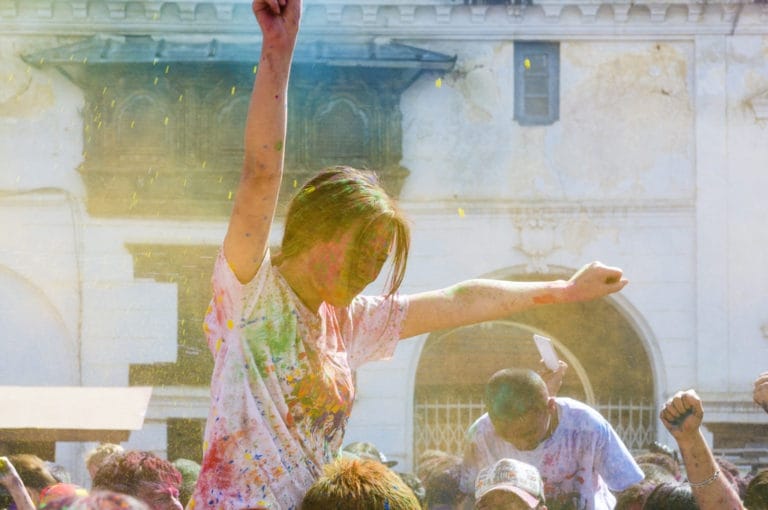
By March the hills begin to bloom. Rhododendrons fire pink and scarlet around Ghorepani and in Langtang; mornings feel alive with birdsong and long, clear sightlines. Annapurna Base Camp and Everest foothill routes hit a sweet spot: warming days, firm trails, manageable crowds. Holi often lands now—laughter in alleys, colour on faces, strangers becoming friends.
- Best for: flowering forests, balanced trekking weather
- Festival: Holi (Festival of Colours)
- Tip: Protect camera gear; powders get everywhere (joyfully)
April — Peak spring; perfect balance
April is Nepal in high definition. Blossoms burn across the hills, the air turns fragrant, and sky windows open wide for mountain panoramas. High trails grow reliable, yet evenings still pull you close to the stove—the right kind of mountain rhythm. In Bhaktapur, New Year festivities (Bisket Jatra) thunder through medieval squares with chariots and cheers.
- Best for: peak spring trekking in Annapurna/ABC, Everest foothills, Langtang
- Festival: Bisket Jatra (Nepali New Year, mid-April) in Bhaktapur
- Tip: Book lodges early; it’s popular for good reason
May — Warmth, wildlife & late-spring calm
May warms the valleys and draws long, gold afternoons in the hills. The last rhododendrons linger in shade while birdsong fills oak forests; early starts keep trekking cool and rewarding. High passes can be feasible for strong trekkers; jungle parks like Chitwan and Bardia reveal wildlife through thinning grass. Buddha Jayanti usually falls this month—a quiet, luminous day in Kathmandu’s sacred spaces.
- Best for: mixed itineraries (hills + wildlife parks)
- Festival: Buddha Jayanti (Apr/May)
- Tip: Start hikes early; afternoons trend warm in valleys
June — The green begins; rice mirrors the sky
June unfurls Nepal in emerald. Rice terraces brim with water and reflect the sky; waterfalls leap from cliffs; clouds travel like living beings. Trekking above 2,500–3,000 m can still work early month, but flexibility becomes your best friend. Down on the paddies, villagers celebrate Ropain Diwas (National Paddy Day) with mud, music, and laughter—agriculture as festival.
- Best for: dreamy photography (mist, waterfalls, bright greens)
- Festival: Ropain Diwas rice-planting festivities (late June)
- Tip: Consider rain-shadow regions (Mustang/Dolpo) for steadier trails
July — Water, light, and intimacy
July is monsoon at full voice in much of Nepal—but it brings intimacy rather than absence. Valleys smell of wet earth and jasmine; tea shops fill with conversation; transport slows and time opens up. Head north into Mustang’s rain shadow and find dry trails and ochre cliffs; stay in the middle hills and watch countryside stitched by falling water. City festivals like Gai Jatra bring pageantry, satire, and masks to the streets.
- Best for: solitude, culture-first trips, Mustang/Dolpo trekking
- Festival: Gai Jatra (dates vary by lunar calendar)
- Tip: Build buffer days; weather can reshuffle plans
August — Lush valleys; river rituals
August stays lush and cinematic. Rivers run fast and brown; terraces glow like a painter’s palette; clouds lift and fall to reveal sudden, enormous mountains. Janai Purnima (Raksha Bandhan) blesses riverside shrines, while in the Kathmandu Valley the lead-up to Indra Jatra stirs masked dancers to life. Trekkers with experience still find windows at altitude; culture-seekers find an open door everywhere.
- Best for: deep-green countryside, authentic village life
- Festivals: Janai Purnima; Indra Jatra build-up (late Aug/Sep)
- Tip: Value month for hotels; carry solid rain gear
September — Nepal’s grand reopening
By September the curtains part. Skies clear, peaks return, and the land exhales after the rains. Trails fill gently at first, then confidently—the beginning of Nepal’s classic trekking season. Dashain may begin late in the month: family reunions, swings in village fields, goats festooned with marigolds, and kites scribbling joy across the blue.
- Best for: transition into peak visibility and reliable conditions
- Festival: Dashain often begins late September or early October
- Tip: Book guides/permits early; demand ramps quickly
October — The crown jewel
October is Nepal’s poster month: broad blue skies, cool mornings, comfortable days, and mountains so clear they look carved. Annapurna and Everest routes hum with warmth, not chaos—a global village of trail stories and stove-side laughter. Tihar (Deepawali) lights homes and streets with lamps and rangoli, turning city evenings into celebrations of glow. It’s busy, yes, but the infrastructure sings and the joy is contagious.
- Best for: peak trekking, perfect visibility, vibrant culture
- Festival: Tihar (late Oct/Nov), Festival of Lights
- Tip: Pre-book flights, lodges, and porters; it’s prime time
November — Golden fields, crisp mornings
November keeps the clarity and adds a burnish. Harvest paints hills in copper and gold; mornings nip at your fingers until tea warms them again. Trails are still lively yet calmer than October; guides, lodges, and routes are all running at their smoothest. In the south and east, Chhath Puja brings riverfront rituals at sunset—worship sung in light.
- Best for: peak-quality trekking with fewer people than October
- Festival: Chhath Puja (late Oct/Nov) on the plains
- Tip: Excellent month for photographers and first-timers
December — Quiet light, big stars
December closes the year with clarity and hush. The Himalaya stands chiselled in winter light; Kathmandu’s days are cool and bright; evenings are for wool hats and momo steam. High passes often become serious, but lower-altitude classics (Poon Hill, Helambu, mid-Annapurna) offer dreamlike mornings and near-empty trails. It’s a month for reflection—the kind that turns a trip into a story you keep.
- Best for: solitude, starry skies, lower/mid-altitude treks
- Culture: Warm teahouse life; New Year build-up
- Tip: Pack insulated layers; book rooms with heating where possible
Best time to visit Nepal by travel style
- Trekking at its best: Oct–Nov; Mar–Apr
- Festivals & culture: Oct–Nov (Dashain/Tihar), Feb–Mar (Shivaratri/Holi)
- Budget & solitude: Jun–Aug; Dec–Jan
- Wildlife (Chitwan/Bardia): Feb–Apr; Nov
A morning that stayed
I woke before the village did. The stove hadn’t been lit yet, and the dining room smelled faintly of woodsmoke and last night’s tea. Outside, the world was a gradient—ink at the edges, then charcoal, then the first suggestion of blue. Somewhere a dog coughed; somewhere a bell rang; somewhere a river rehearsed its own name.
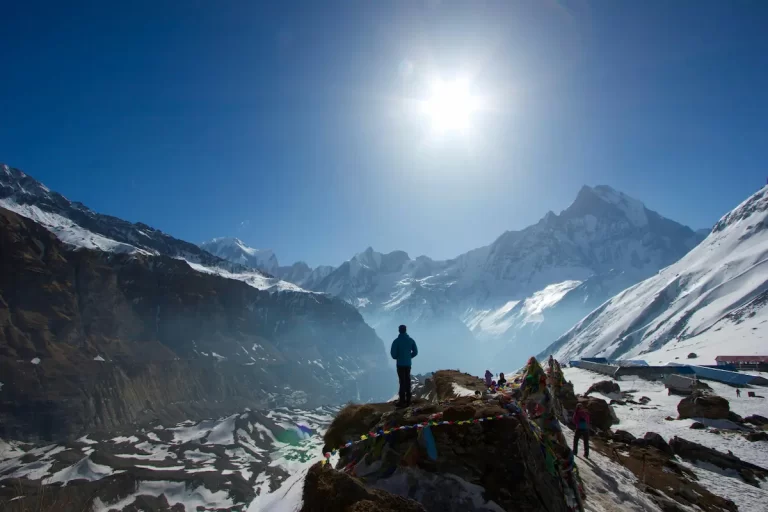
I stepped onto the frosted porch and the mountains were silhouettes, a promise more than a fact. Then one peak caught the sun—a thin blade of gold—and another, and another, until the whole wall of the Annapurnas was on fire. Prayer flags cracked in the new wind, and a raven wrote an untidy line across the sky. It wasn’t about distance or elevation or even photographs. It was about how a place can make room inside you—how you arrive as one person and leave a little wider.
FAQs — Best time to visit Nepal
What is the best time to visit Nepal for trekking?
Late September to November for peak visibility and stable weather; March to April for blossoms and warmer days.
Is winter a good time to visit Nepal?
Yes—especially for culture days and lower-altitude treks. It’s colder, but skies are clear and crowds are thin.
Can I visit during monsoon?
Absolutely. Choose rain-shadow regions like Mustang or Dolpo, build in flexibility, and focus on culture, food, and photography.
Which month is cheapest?
Typically June–August (monsoon) and early December, with value deals on stays and fewer visitors.
Is October too crowded?
It’s the busiest—for good reasons. Book guides, flights, and teahouses early; trails still feel friendly rather than chaotic.
Further reading
- Best Time to Trek Nepal
- How to Train for Everest Base Camp
- How Much Does a Nepal Trek Cost?
- Annapurna Circuit vs ABC Comparison
- Nepal Tourism Board — Trekking Permits & Visitor Info
Choose your season, write your story
Ready to feel the season that fits your spirit?
- Explore our Annapurna Adventures
- Join Everest Base Camp 2026
- Prefer something bespoke? Plan a Custom Nepal Trek