
The 5 Best Temples in Phuket – History, Legends & Local Travel Guide
Phuket is more than beaches and nightlife. Step inside incense-scented halls, gold-tipped stupas, and centuries of living tradition with this traveler-crafted guide to the best temples in Phuket—complete with cultural context, etiquette, photo tips, and an easy one-day route.
Interactive Map – Explore the locations of Phuket’s most beautiful temples and plan your visit with ease.
Map & Quick Overview
The best temples in Phuket are scattered across the island: Wat Chalong anchors the south near Chalong Bay, Wat Khao Rang Samakkhitham perches above Phuket Town, while Wat Phra Nang Sang, Wat Sri Sunthon, and Wat Phra Thong lie further north around Thalang, threaded by village lanes, frangipani trees, and the slow rhythm of local life.
Buddhism & Temple Culture in Phuket
Buddhism in Phuket isn’t a quiet background hum—it’s the daily rhythm. Temples are where grandmothers teach grandchildren how to wai, where teenagers ask for blessings before exams, and where communities gather to mark new beginnings and say soft goodbyes. A morning at the wat balances the rest of the day.
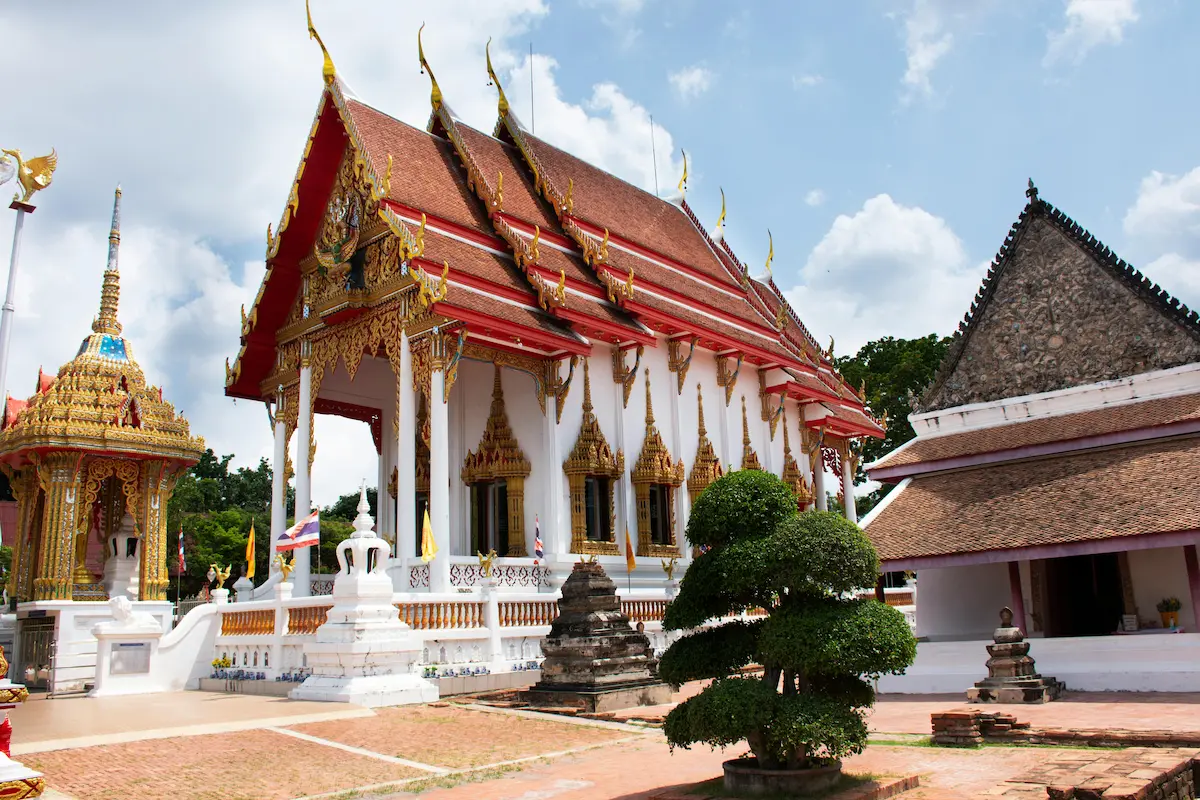
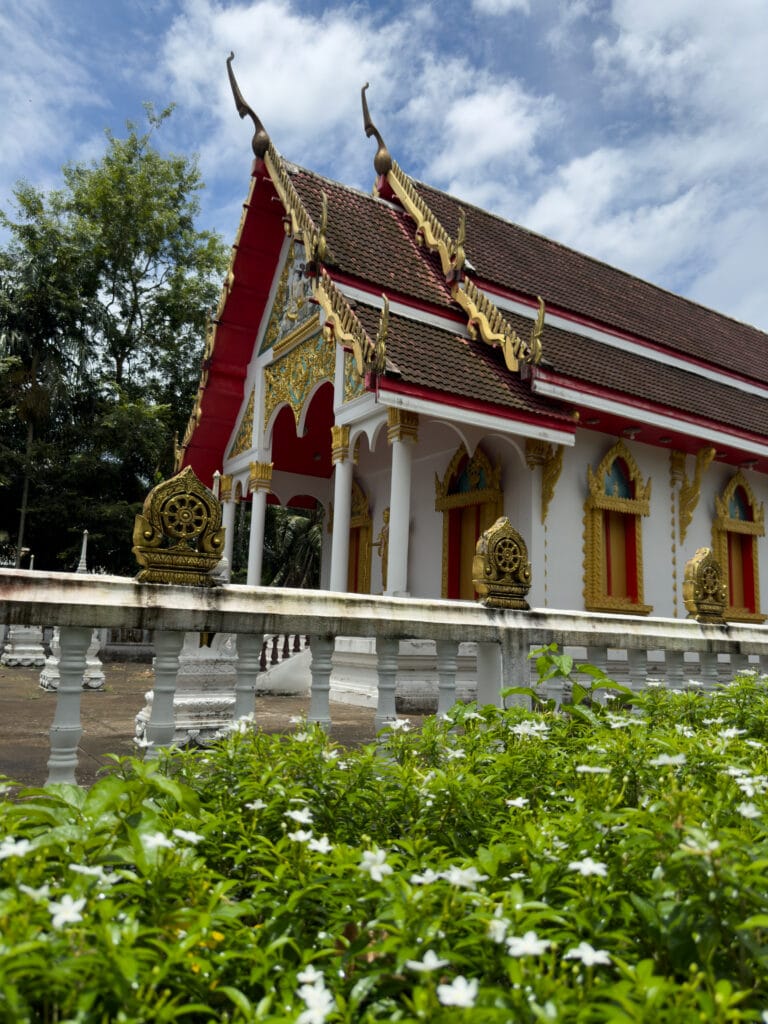
Architecturally, Phuket’s wats reflect the island’s crossroads history. You’ll notice classic Thai lines—tiered roofs, mirror‑mosaic gables, and naga stairways—alongside Chinese guardian lions and folk motifs that nod to centuries of migration and tin‑trade ties. Murals double as storybooks; each main Buddha image carries a posture and gesture with purpose.
Visiting with context transforms a pretty building into a living classroom—part art museum, part community hall, part spiritual anchor.
If you’d like to go deeper into customs, etiquette, and annual festivals before visiting any of the best temples in Phuket, the
Tourism Authority of Thailand’s official Phuket guide
is an excellent primer. It covers respectful dress, festival calendars, and the meaning behind common Buddha postures—ideal pre‑reading to enrich your time on the island.
Wat Chalong – Phuket’s Beating Spiritual Heart
If Phuket had a spiritual capital, Wat Chalong would be it. From first light, incense curls into the warm air, bells chime faintly, and locals arrive with marigold garlands and quiet intentions. This isn’t just another stop on a list of temples to visit in Phuket—it’s the island’s living sanctuary.
History & Legends
Built in the early 19th century, Wat Chalong honors two revered monks—Luang Pho Chaem and Luang Pho Chuang—who became local heroes during the 1876 tin‑miners’ rebellion. They didn’t pick sides; they picked up herbal medicine, bandages, and compassionate words. The stories stuck. Decades later, people still come to whisper their names when asking for protection, healing, or luck.
Architecture & Atmosphere
The star is the Phra Mahathat Chedi, a 60‑meter stupa said to house a relic of the Buddha. Inside, luminous murals trace the journey from birth to enlightenment; outside, a breezy balcony frames Chalong Bay in sea‑glass blues. In the smaller halls, gilded images gleam with fresh gold leaf. Every so often, a volley of firecrackers booms from a brick kiln—joyful noise offered in thanks for answered prayers.
Traveler Notes
- Best time: Early morning, when the grounds feel contemplative and cool.
- Etiquette: Shoulders and knees covered (sarongs usually available on site).
- Photo tips: Sunrise side‑light makes the stupa shimmer. A 35–50mm lens flatters details without heavy distortion.
- Nearby eats: Brunch spots around Chalong; grab an iced coffee to reset before the next temple.
Wat Phra Nang Sang – The “Messy” Temple with a Thousand Stories
Some wats are pristine and symmetrical. Wat Phra Nang Sang is gloriously not. It’s eclectic in the best way—like a living scrapbook of local faith, layered through centuries. Wander slowly; the magic here is in the details.
History & Legends
Often cited as the oldest temple in Phuket, Wat Phra Nang Sang reaches back more than five centuries. Its nickname—Temple of the White Blood—comes from the legend of a falsely accused princess whose blood ran white at execution, symbolizing innocence. The ground itself has seen history turn; during the 1785 Burmese invasion of Thalang, the temple served as a military camp.
Architecture & Atmosphere
Expect contrasts: half‑built halls beside weathered chedis; Chinese lion guardians flanking naga stairways; murals that jump from classical Jataka tales to folk‑story scenes that feel almost cinematic. The showstoppers are the Three Kings—colossal bronze Buddha statues among the oldest in Thailand. Their patina, scale, and stillness create an immediate hush.
Traveler Notes
- Best time: Late afternoon for soft light and long shadows across the bronzes.
- Pair with: Thalang National Museum for historical context and artifacts.
- Photo tips: Wide angle for the jumble; 85mm for expressive details and guardian faces.
- Nearby: Small local stalls—coconut ice cream hits the spot on hot days.
Wat Sri Sunthon – The Temple of the Reclining Buddha
Drive the old road north and you’ll see him first—lounging on the roofline in golden repose. The 29‑meter reclining Buddha of Wat Sri Sunthon is impossible to miss and easy to admire.
History
Founded in 1792 and originally named Wat Lipon, this temple later took the name Sri Sunthon. The reclining image depicts Pang Sai Yat—the Buddha’s final moments before Nirvana—a reminder that calm and clarity are the ultimate destinations.
Architecture & Atmosphere
Beyond the rooftop giant, the grounds reveal guardian statues, a bell tower with breezy views, and story‑rich murals. The vibe is everyday‑local: a quick merit‑making stop between errands, a family teaching a child how to wai, a monk watering frangipani after a hot morning.
Traveler Notes
- Best time: Morning light flatters the gold leaf and keeps temps pleasant.
- Don’t miss: Climb the bell tower for context shots and a sense of scale.
- Photo tips: Step back across the road for a full‑frame composition of the reclining image.
- Nearby eats: Simple noodle shophouses—perfect for a bowl post‑visit.
Wat Khao Rang Samakkhitham – The Golden Buddha on the Hill
Above Phuket Town, the air thins into birdsong and treetops sway. Wat Khao Rang sits here in calm company, looking down on the bustle with a soft, golden smile.
History
Among the first places on the island to enshrine a large seated Buddha, Khao Rang became a landmark long before it appeared in glossy brochures. For locals, it’s a place to reset—ten minutes with the view can rescue a crowded day.
Architecture & Atmosphere
Naga‑lined steps guide you upward to the main image, bright and serene, while guardian figures keep watch in a rainbow of paint. Shaded gardens provide benches for lingering—bring a bottle of water, sit, and let the city hum below you for a while.
Traveler Notes
- Best time: Late afternoon. The light turns honey‑gold and the heat eases.
- Pair with: Khao Rang Viewpoint for sunset panoramas over Phuket Town.
- Photo tips: Frame the seated Buddha through overhanging branches for depth and scale.
- Nearby: Hill cafés for iced Thai tea and shade between stops.
Wat Phra Thong – The Half‑Buried Buddha
If intrigue had an address, it would be Wat Phra Thong. The story is whispered island‑wide: a boy tied his buffalo to a field post that wasn’t a post at all but the tip of a buried Buddha image. Tragedy followed, hornets defended the site, and villagers built around what they dared not move. The Buddha remains partially underground, as if the island still cradles him.
Architecture & Atmosphere
The visible portion of the Buddha is shielded by a protective structure, soft‑lit and solemn. Nearby, a small museum displays Phuket’s tin‑mining past—rusted tools, sepia photos, and fragments of a boom‑and‑bust century that shaped the island as surely as the sea. The compound feels contemplative; voices drop to a hush without being asked.
Traveler Notes
- Best time: Morning calm rewards patient visitors and careful photographers.
- Don’t miss: The museum—modest but revealing, especially for history buffs.
- Photo tips: A fast 35mm or 50mm lens works well for low light inside the chamber.
- Nearby: Seasonal fruit stalls line the lanes; try whatever is ripest—mangosteen and longan are local favorites.
Practical Travel Tips for Visiting Phuket Temples
- Dress with respect: Cover shoulders and knees; avoid clingy or sheer clothing. Many wats provide loaner sarongs.
- Shoes off: Remove footwear before entering the main hall. Keep feet pointed away from Buddha images.
- Mind the moment: Skip flash, silence your phone, and pause during prayers or blessings.
- Getting around: A motorbike or half‑day driver is the easiest way to link the best temples in Phuket in one loop.
- Hydrate & shade: Early morning and late afternoon are cooler; bring water, sunscreen, and a hat.
- Donations: Small offerings help maintain the grounds and community programs; carry some small notes/coins.
- Respect images: Avoid climbing on statues or posing playfully with sacred figures.
- Accessibility: Many compounds are flat, but some halls have steps; a foldable umbrella helps with sun or sudden showers.
Best Time of Year to Visit Phuket’s Temples
Temples welcome visitors year‑round, but seasons change the feel. From November to March, the air is drier and breezier—perfect for long, wandering mornings and cool evenings. The May–October green season brings sudden showers and emerald gardens, fewer crowds, and hauntingly beautiful light after rain. Pack a compact umbrella and enjoy how the frangipani scent intensifies when the ground is wet.
Festival days add color and crowds. Keep an eye out for local merit‑making ceremonies, Kathina robe offerings (typically late rainy season), and neighborhood fairs where lanterns glow at dusk and vendors sell sweets beside the temple gates. If your timing aligns, it’s worth leaning into the bustle—the photos and memories are worth it.
What to Pack for a Comfortable Temple Day
- Light, modest clothing (breathable fabrics; shoulders & knees covered)
- Easy on/off shoes or sandals (you’ll remove them often)
- Hat, sunglasses, reef‑safe sunscreen
- Refillable water bottle (many cafés nearby will refill)
- Compact umbrella or lightweight rain jacket (green season)
- Small bills/coins for donations and incense/flower offerings
- Camera with a fast prime (35–50mm) and microfiber cloth for humidity
Suggested Temple Route (1 Day)
Here’s a relaxed loop that balances culture with coffee breaks, views with village lanes:
- Wat Chalong – arrive early for quiet halls and soft light.
- Wat Khao Rang Samakkhitham – climb for city views and shaded gardens.
- Wat Sri Sunthon – greet the rooftop recliner and ring the bell tower.
- Wat Phra Nang Sang – wander the eclectic grounds and find the Three Kings.
- Wat Phra Thong – finish with the half‑buried Buddha and a museum browse before heading back.
Pro tip: Save short café or noodle stops between sites—your photos (and patience) will thank you.
FAQs About Visiting Temples in Phuket
Are Phuket temples free to visit?
Most are free; small donations are appreciated and help maintain the grounds.
Can I take photos inside the halls?
Usually yes—shoot respectfully, avoid flash, and pause during active prayers or blessings.
Which is the oldest temple in Phuket?
Wat Phra Nang Sang is commonly cited as the island’s oldest, with roots extending back more than five centuries.
What should I wear?
Think modest: covered shoulders and knees for all genders. Light fabrics help in the tropics.
Can I visit all five temples in one day?
Yes, with an early start and a simple loop as suggested above. Hiring a driver keeps the pace relaxed.
Conclusion & Useful Links
Exploring the best temples in Phuket is more than sightseeing—it’s a recalibration. Each wat has its own rhythm and voice: the firecracker joy of Wat Chalong, the layered history of Wat Phra Nang Sang, the serene rooftop posture at Wat Sri Sunthon, the tree‑framed calm of Wat Khao Rang, and the quiet mystery of Wat Phra Thong. Visit with time, humility, and curiosity; you’ll leave with more than photos.
Want to take your temple days further?
- Level up your temple photography: Join us at
Reflections Photography
for traveler‑friendly tutorials on low‑light, golden‑hour, and composition techniques that make shrine details sing. - Plan your wider Phuket journey: Browse
Resurgence Travel
for hand‑picked experiences and local guides. Our Temples of Phuket small‑group tour is in the works—bookmark the homepage for launch. - Go beyond Thailand: For big‑picture inspiration across the region, dip into
Go Find Asia—city walks, market guides, and slow‑travel ideas from Bangkok to Bali. - Know before you go: The
Tourism Authority of Thailand’s official Phuket guide
covers etiquette, festivals, and official updates that pair perfectly with this on‑the‑ground temple guide.
This is useful information
This is useful information .