What Makes a Place Feel the Way It Does
Some places fade the moment you leave them. Others stay with you for years, resurfacing unexpectedly — in the way you remember light, sound, or how time seemed to move differently there. It’s rarely the landmarks that linger. It’s something harder to name.
People often try to explain travel through highlights: where to go, what to see, when to visit. But those explanations feel incomplete because they miss the underlying question most travellers are really asking. Not where is worth going — but why certain places feel the way they do once you’re actually there.
This is where travel becomes less about destinations and more about perception. A city can feel generous or exhausting. A village can feel open or closed. The same street can feel intimate one day and overwhelming the next. These shifts are rarely random. They are shaped by time, behaviour, expectation, and energy — forces that are easy to overlook but impossible to escape once you notice them.
Understanding what makes a place feel like it does isn’t about mastering travel. It’s about learning to read context. To recognise how seasons, culture, rhythm, and human presence interact to shape experience — often more powerfully than scenery ever could.
This article explores those forces, not to offer answers, but to make sense of why some places stay with us long after the journey ends.
Places Are More Than Locations
It’s easy to confuse places with locations. A location can be pinned, measured, and described. It has coordinates, a name, and a list of features. A place is something else entirely. It’s a location once people, habits, memory, and time have settled into it.
This is why two travellers can visit the same city and come away with completely different impressions. One remembers warmth and generosity; the other remembers friction and fatigue. Both were technically in the same location, but they did not experience the same place.
What makes the difference is not the checklist of attractions, but the conditions under which those attractions were encountered. Time of day, season, crowd density, local routines, and personal expectation all shape perception. A quiet neighbourhood in the early morning can feel intimate and open; the same street at midday can feel closed and transactional. Nothing about the physical environment has changed, yet the experience is transformed.
When people ask what makes a place feel like it does, they are often unknowingly asking about these invisible layers. They are asking why one café feels welcoming and another feels tense, why a city feels generous one week and overwhelming the next, why certain moments linger while others disappear immediately.
Travel media tends to flatten places into summaries. Destinations become brands. Cities become bullet points. This makes places easier to sell, but harder to understand. It also explains why so much travel advice feels oddly disconnected from real experience. It describes the surface, not the atmosphere.
To understand a place, you have to look beyond what exists there and pay attention to how it is being used, when it is being encountered, and by whom. Places are not static backdrops. They are active environments shaped by daily life, repetition, and change.
Once you start seeing places this way, travel shifts. You stop asking what is worth seeing and begin noticing what is already happening around you. And that is usually where meaning begins.
Sometimes the same place feels like four different places depending on when you arrive — Nepal is one of the clearest examples, and I explored that in Nepal seasons.
Time Changes Everything
Time is the most underestimated force in travel. It’s often treated as a logistical concern — when to arrive, how long to stay, what season to avoid — but its real impact is experiential. Time determines not just what you see, but how a place behaves while you’re there.
A city at dawn is not the same city at night. Streets that feel closed and hurried during business hours can feel generous and human once routines loosen. The same café that feels transactional at midday might feel like a neighbourhood living room early in the morning. These shifts are subtle, but they fundamentally change how a place is perceived.
Seasons magnify this effect. Weather alters movement. Light changes mood. Festivals and agricultural cycles shape social rhythm. During certain periods, places turn outward — expressive, communal, and noisy. At other times, they pull inward, becoming quieter and more observational. Neither state is more authentic than the other. They are simply different expressions of the same environment.
This is why timing often explains contradictions in travel stories. One person describes a destination as calm and reflective; another calls it chaotic and overwhelming. Both can be right. They encountered the place at different moments in its cycle, under different conditions, and with different expectations.
When people struggle to articulate what makes a place feel like it does, time is usually the missing variable. It’s not that the place changed — it’s that the moment did. Daily routines shifted. Social energy rose or fell. Visibility increased or disappeared. The environment responded accordingly.
Understanding time as an active influence, rather than a background detail, reframes travel entirely. Instead of asking how to optimise a visit, the more useful question becomes: what version of this place am I stepping into right now? Once you start noticing that, places stop feeling inconsistent and start making sense on their own terms.
Culture Is Behaviour, Not Decoration
Culture is often treated as something to be observed — temples, clothing, rituals, festivals — but those are only its visible expressions. What shapes experience more consistently is behaviour: how people move through space, how they relate to strangers, how rules are enforced or ignored, and how daily life responds to pressure.
This is why culture can feel welcoming in one moment and impenetrable in another. The same community might appear open during a festival and closed during routine workdays. A neighbourhood that feels social in the evening may feel transactional by midday. These shifts aren’t contradictions; they are context-driven behaviours responding to time, density, and expectation.
Visitors often misunderstand this because they look for culture as spectacle. They notice what is different, not how it functions. They photograph rituals without understanding what they interrupt. They mistake performance for participation. When disappointment follows, it’s usually because behaviour didn’t match expectation, not because culture was absent.
Understanding what makes a place feel like it does requires paying attention to these behavioural cues. How quickly do conversations start or end? Who occupies public space, and when? What happens when something goes wrong? These small interactions reveal more about a place than any symbol ever could.
Culture is also shaped by repetition. Daily routines matter more than exceptional moments. The way people queue, wait, negotiate, rest, and adapt creates an emotional baseline that visitors absorb subconsciously. This is why places can feel tense, relaxed, generous, or closed without any obvious reason.
When culture is understood as behaviour rather than decoration, travel changes. You stop collecting differences and start reading patterns. You become less surprised by friction and more aware of your own role within it. And in doing so, places stop feeling opaque and begin to reveal themselves through ordinary, repeatable moments.
Energy, Crowds, and Emotional Density
Energy is often mistaken for atmosphere, but it’s more physical than that. It’s the cumulative effect of people moving through space — their pace, their attention, their patience, their noise. Energy is what turns a beautiful street into an exhausting one, and what makes an ordinary corner feel strangely alive.
Crowds are the obvious factor, but density is only part of the story. A place can be full and still feel calm if movement is predictable and social norms are stable. It can also be nearly empty and still feel tense if the environment is unsettled or the social rhythm is strained. What matters is emotional density — the amount of attention, pressure, and stimulation a place carries at a given moment.
This is why certain places feel generous at one hour and hostile at another. It’s why the same market can feel intimate in the morning and aggressive in the afternoon. It’s why nightlife can feel liberating in one city and oddly draining in another. The physical setting stays the same, but the human energy inside it shifts.
Many travellers don’t realise how strongly they respond to this. They think they are reacting to scenery or quality, when they are actually reacting to stimulation levels. Noise, crowd movement, heat, waiting time, and social friction accumulate. Eventually, even small inconveniences feel personal. The place becomes “too much,” and the traveller assumes something is wrong with it.
Understanding what makes a place feel like it does means noticing energy early, before it becomes fatigue. Not to avoid it — sometimes intensity is exactly what you came for — but to recognise what it is doing to your perception. Energy changes what you notice. It narrows attention. It affects patience. It makes details disappear.
Some people thrive in high-energy environments. Others interpret them as stress. Neither response is right or wrong. But it explains why travel recommendations fail so often. They assume a universal response to atmosphere. In reality, energy is one of the most personal variables in how a place is experienced.
What People Get Wrong When They Try to Explain Places
Most explanations of place fail because they aim for certainty. They reduce experience to lists, rankings, and recommendations — what to see, when to go, what to avoid. This approach makes places easier to package, but it strips away the conditions that actually shape how they feel.
The most common mistake is optimisation. People search for the “best” time, the “right” neighbourhood, the “ideal” experience, assuming that these variables can be solved in advance. When reality doesn’t match the promise, disappointment follows. The place is blamed, rather than the framing.
Another mistake is treating personal tolerance as universal. Advice rarely accounts for differences in patience, energy sensitivity, or social comfort. What feels vibrant to one person feels overwhelming to another. What feels quiet to one feels empty to someone else. These differences are rarely acknowledged, yet they determine satisfaction more than any landmark ever could.
When people ask what makes a place feel like it does, they often expect an external explanation — architecture, climate, history. Those matter, but they are incomplete on their own. The missing piece is interaction: how people behave within those structures, and how visitors interpret that behaviour through their own expectations.
Travel writing also tends to exaggerate clarity. It presents places as consistent, stable experiences, when in reality they are fluid. A city on a weekday morning is not the same city on a festival night. A town during harvest is not the same place during off-season. Flattening those differences makes advice easier to consume, but it makes understanding harder.
Explaining places honestly requires accepting ambiguity. It means acknowledging that the same place can feel contradictory, and that those contradictions are not flaws to be fixed. They are signals. They tell you how context, timing, and human presence interact in real time.
Once you stop trying to simplify places for explanation, they begin to make more sense — not because they become predictable, but because you learn to expect variation rather than resolution.
The Role of Expectation
Expectation is the quiet lens through which every place is judged. Long before you arrive, ideas have already formed — from photos, stories, advice, and assumptions you may not even remember absorbing. These expectations don’t just shape anticipation; they actively shape interpretation.
This is why the same experience can feel rewarding or disappointing depending on what someone believed they were arriving to find. A slow afternoon can feel peaceful if it was expected, or frustrating if it wasn’t. A noisy street can feel energising or intrusive based entirely on what the visitor hoped for. The place hasn’t changed — the frame has.
Expectation also influences what people notice. When someone arrives looking for beauty, they overlook inconvenience. When they arrive braced for difficulty, they notice every delay. Attention narrows around confirmation. Over time, the experience begins to feel self-validating, even if it only reflects the mindset brought into it.
This is where many misunderstandings about travel originate. People assume places are responsible for their emotional response, without recognising how much of that response was preloaded. They describe a destination as overrated or magical, chaotic or calm, without accounting for the internal comparison they were making.
Understanding what makes a place feel like it does requires stepping back from those expectations and observing how they interact with reality. This doesn’t mean arriving without preference or desire — that’s unrealistic. It means recognising expectation as an influence rather than a truth.
When expectation loosens, perception widens. Friction becomes information rather than failure. Stillness becomes available rather than empty. Places stop being measured against imagined versions of themselves and start being encountered as they are.
Travel rarely disappoints because a place falls short. More often, it disappoints because expectation arrived first and refused to move aside.
Learning to Read a Place Instead of Consuming It
Most travel habits are built around consumption. Places are approached as experiences to be collected, evaluated, and compared. Time is spent moving between highlights, documenting proof, and measuring whether expectations are being met. This approach isn’t wrong, but it limits what can be noticed.
Reading a place requires a different posture. It involves slowing down enough to observe patterns rather than moments. Instead of asking what is happening, the more useful question becomes how things usually work here. Who occupies space at different times of day? What changes when pressure is added? What remains consistent regardless of circumstance?
This kind of attention doesn’t come naturally in unfamiliar environments. Discomfort often appears first. Waiting feels longer. Silence feels awkward. Routine feels unproductive. But these moments are informative. They reveal how people manage time, share space, and respond to interruption. They show how order is maintained — or improvised — when things don’t go as planned.
Understanding what makes a place feel like it does often emerges from these in-between moments rather than from standout events. Sitting through a full cycle of a day in one neighbourhood reveals more than rushing between multiple locations. Returning to the same café or street at different hours exposes shifts that would otherwise go unnoticed.
Consuming places prioritises novelty. Reading places prioritises familiarity. Over time, this changes the nature of travel itself. You stop chasing difference for its own sake and begin to notice continuity. You become less reactive and more attentive. Friction becomes data. Comfort becomes contextual rather than assumed.
This doesn’t make travel quieter or less engaging. It makes it deeper. Places stop feeling like performances staged for visitors and start revealing themselves through ordinary repetition. And once you learn to read a place this way, it’s difficult to go back to skimming the surface.
A Personal Moment
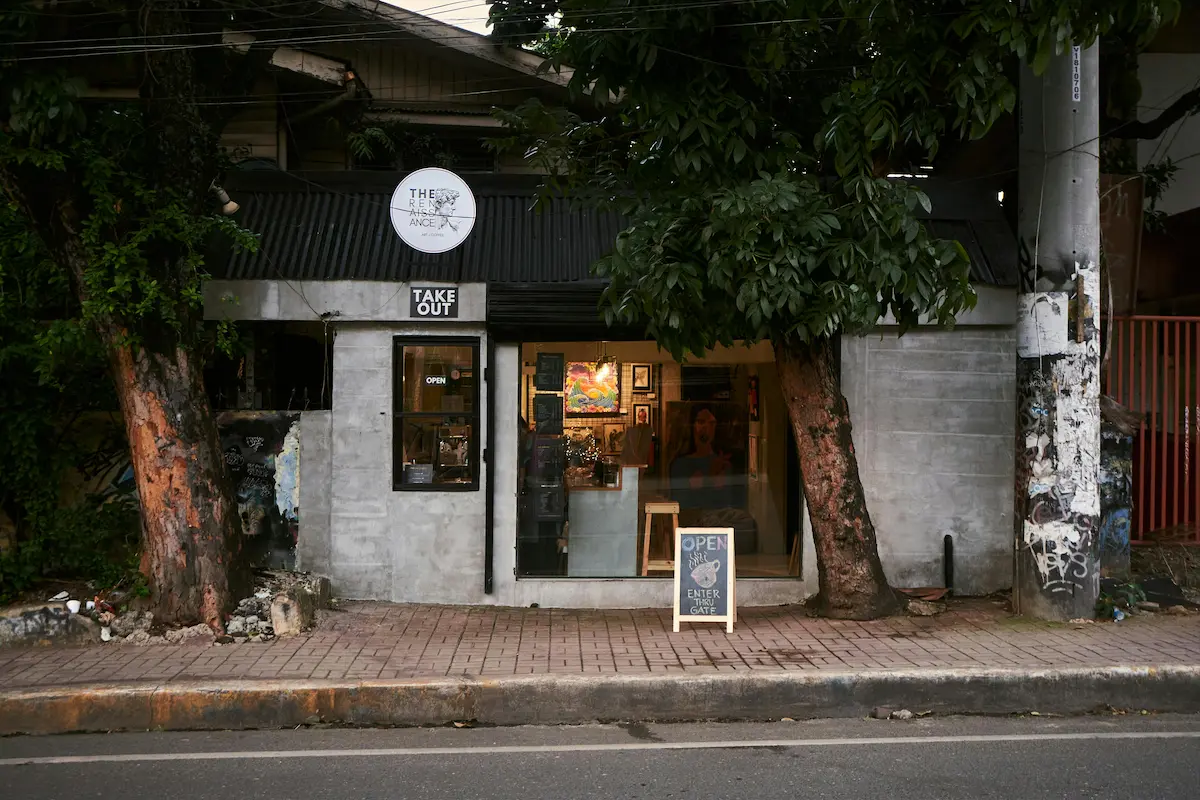
One afternoon, I sat on a low step outside a small shop with nothing in particular to do. The street wasn’t scenic. No landmark, no view, no reason to stop except that my feet were tired and the shade was good. People passed in both directions, mostly without looking up.
A delivery truck arrived and blocked the road. No one complained. A man stepped into the street to direct traffic with small hand movements, informal but effective. Someone laughed at something I couldn’t hear. The blockage lasted five minutes, maybe ten, then cleared without comment. Life folded back into itself as if nothing had happened.
I realised that if I had been in a hurry, this moment would have felt irritating. If I had been trying to “see everything,” it would have felt like wasted time. Sitting still, it felt like access.
Nothing about the place announced itself as meaningful. And yet, that stretch of time explained more than any attraction could have. It showed how disruption was handled, how patience functioned, how space was shared without instruction. It revealed a rhythm that didn’t need to perform.
This is often how understanding arrives. Not through highlights, but through unremarkable moments that only register when expectation relaxes. When movement pauses. When attention widens.
Moments like this are easy to miss because they don’t advertise themselves. But they quietly answer the question of what makes a place feel like it does — not through explanation, but through experience.
Closing Thoughts
Travel becomes simpler when you stop trying to extract certainty from places. Not because places become predictable, but because you begin to expect variation rather than a single correct experience. This is the point where advice starts to matter less than attention.
Places are shaped by layers that rarely appear in summaries: time, behaviour, energy, routine, and expectation. When those layers align, a place can feel effortless and coherent. When they don’t, the same place can feel confusing or harsh. The difference is often less about quality and more about context.
This is why lists and rankings fail so often. They describe a place as if it exists in one stable form, when in reality it shifts continually. A place is not just what it is — it is what it becomes under different conditions and different states of mind.
Learning to read those conditions doesn’t remove mystery from travel. It deepens it. You notice more. You interpret less quickly. You give places space to reveal themselves without demanding that they match a pre-built idea.
Understanding what makes a place feel like it does is not about becoming a better planner. It’s about becoming a better observer. The reward is subtle but lasting: places stop feeling like products to consume and start feeling like environments you can actually enter — with attention, humility, and a little more patience than you arrived with.